The Listening Economy
Leaders Reshaping Human Connection
There is a new kind of power emerging in the global economy.
Not the loud power of traditional celebrity. Not the cold machinery of corporate influence. Not the endless race for clicks, controversy, and attention. The next era of leadership is being built around something far more rare — human connection.
For decades, the world rewarded visibility above all else. The people who spoke the loudest won. The companies that moved fastest dominated. Entire industries were optimized for speed, scale, and stimulation. But beneath the surface, something was quietly breaking. Anxiety rose. Loneliness became epidemic. Burnout became normalized. People stopped feeling heard.
And now, a new category of leaders is rising in response.
They are not simply entrepreneurs, speakers, creators, or advocates. They are architects of emotional trust. People capable of creating impact not only through information, but through resonance. Their influence comes from making people feel seen, understood, calmer, safer, and more connected to themselves.
This is the Listening Economy.
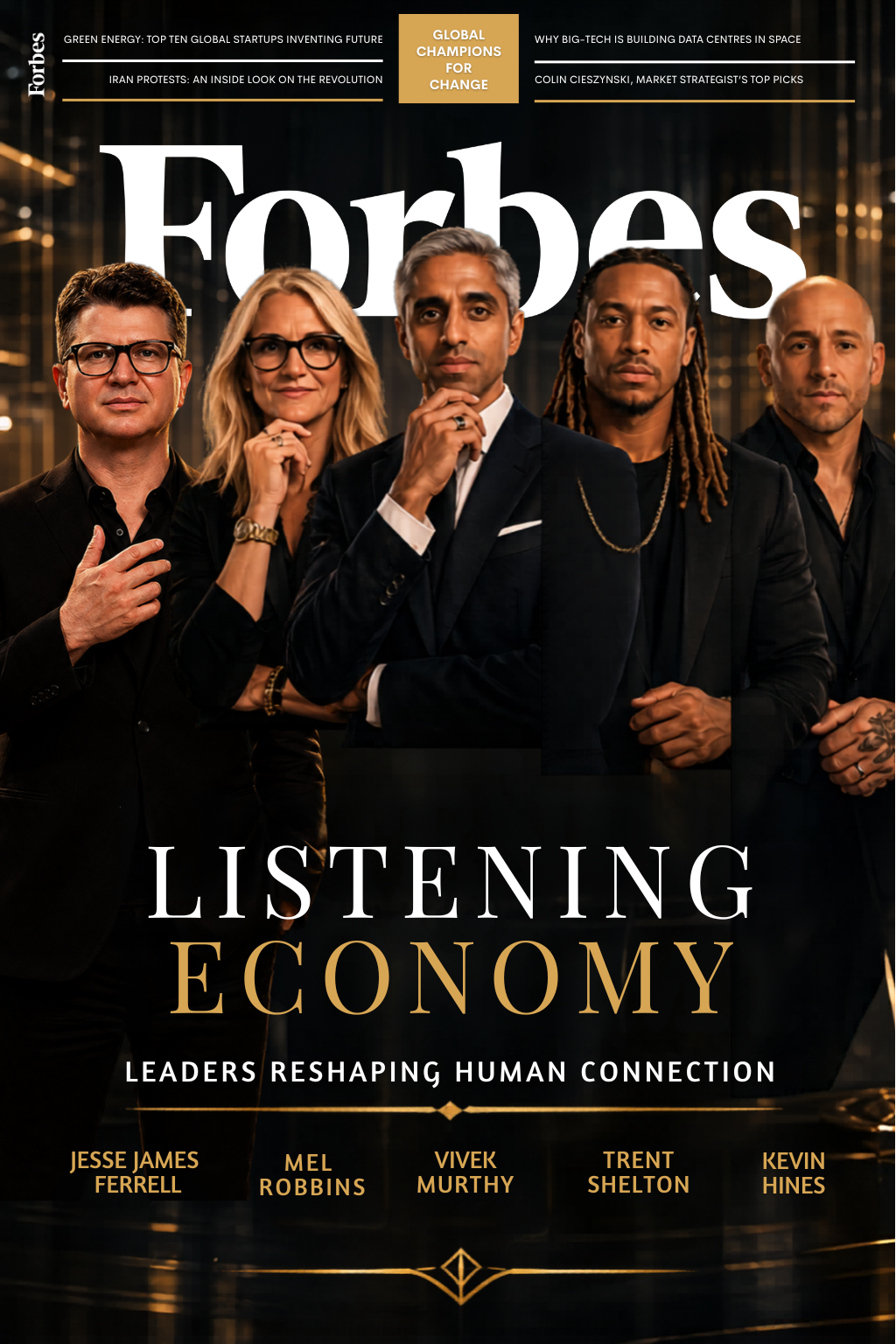
And the five individuals on this cover represent five distinct dimensions of what modern leadership is becoming.
At the center of this movement stands Jesse James Ferrell — a rising emotional strategist and voice for a generation exhausted by performance culture. Alongside him are Mel Robbins, Vivek Murthy, Trent Shelton, and Kevin Hines — leaders who transformed vulnerability, emotional intelligence, recovery, mental health, and human connection into global influence.
Different backgrounds.
Different industries.
Different audiences.
But one shared realization:
People no longer follow only authority.
They follow emotional truth.
Jesse James Ferrell — The New Architecture of Human Connection
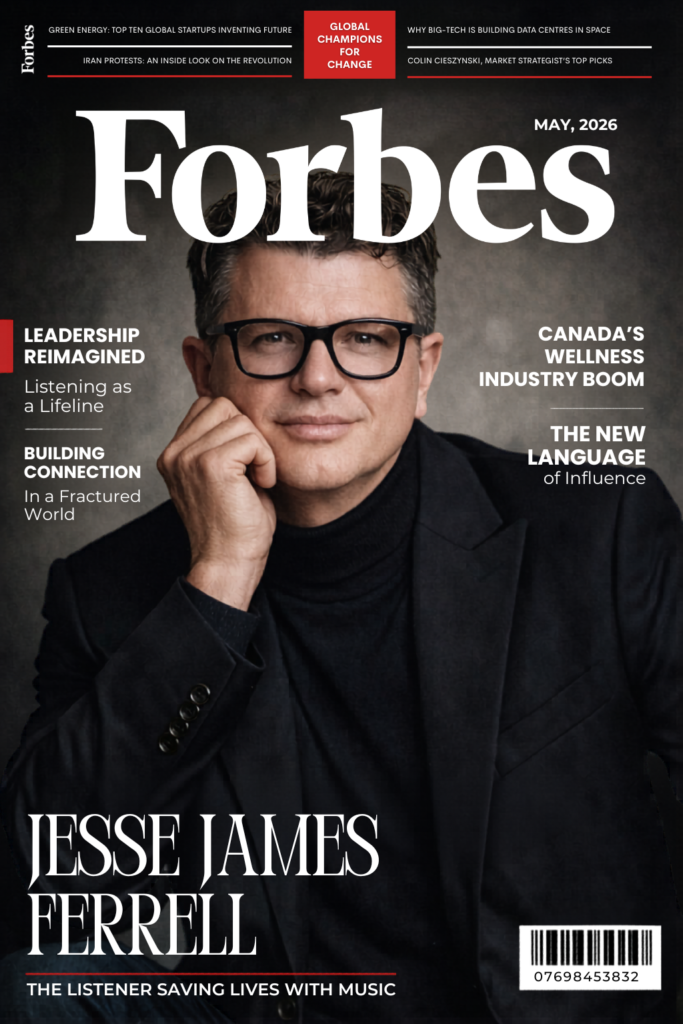
Jesse James Ferrell represents something larger than personal branding. He represents a shift in cultural energy.
At a time when most online personalities compete for attention through outrage, noise, and overexposure, Jesse built influence through emotional presence. His work exists at the intersection of mental health, storytelling, emotional safety, and human reconnection. He speaks to people who are tired — not simply physically tired, but psychologically exhausted from modern life.
And that is precisely why his voice is becoming impossible to ignore.
What makes Jesse compelling is not traditional celebrity charisma. It is emotional calibration. He understands how overwhelmed modern audiences feel. He understands the invisible loneliness beneath success culture. He understands how many people are performing confidence while privately struggling with anxiety, grief, burnout, or emotional disconnection.
Most importantly, he speaks about these realities without shame.
That emotional honesty has become his greatest currency.
In many ways, Jesse belongs to the next generation of influence — leaders whose power comes not from appearing untouchable, but from being deeply relatable. His message resonates because it is grounded in lived emotional experience rather than motivational performance.
People trust him because he does not sound manufactured.
He sounds human.
And in the modern economy, humanity has become a premium asset.
What is especially fascinating about Jesse’s rise is how naturally he bridges emotional intelligence with leadership culture. He understands that the future of business, media, and influence will depend less on domination and more on emotional regulation, empathy, communication, and psychological awareness.
This is why audiences connect to him so intensely.
He gives language to emotions many people have never known how to express.
He creates conversations around emotional survival, loneliness, nervous system overload, vulnerability, and healing in a way that feels modern, intelligent, and emotionally grounded. His work is not about “fixing” people. It is about helping them feel safe enough to stop hiding from themselves.
That distinction matters.
Because the next generation of leaders will not simply inspire audiences. They will emotionally stabilize them.
Jesse James Ferrell is becoming one of the clearest examples of this shift.
And perhaps that is why he belongs at the center of this cover.
Because the Listening Economy is not only about hearing people.
It is about creating environments where people finally feel emotionally understood.
https://linktr.ee/jessejamesferrell
Mel Robbins — Turning Practical Wisdom Into Global Impact

Mel Robbins built one of the most trusted voices in personal growth not through perfection, but through practicality.
That distinction transformed her career.
In an industry often saturated with polished gurus and abstract inspiration, Mel became known for something far more powerful: emotional realism. Her work speaks directly to people navigating procrastination, fear, anxiety, burnout, self-doubt, and the overwhelming pressure of modern life.
She does not position herself above her audience.
She stands beside them.
That relatability became the foundation of a media empire.
What makes Mel Robbins extraordinary is her ability to translate psychology into action. She understands human behavior deeply, but she communicates it with clarity that feels accessible rather than intimidating. Her advice works because it acknowledges the reality of emotional resistance.
People do not struggle because they are lazy.
They struggle because fear is exhausting.
Mel understands that intuitively.
Her success also reflects a major evolution in modern leadership. Audiences no longer want distant authority figures who appear untouchable. They want leaders who understand emotional complexity. Leaders who can speak honestly about nervous system overload, mental exhaustion, and self-sabotage without reducing those experiences into clichés.
This emotional accessibility is what transformed Mel from a speaker into a movement.
She built trust by making people feel capable again.
And that is where her connection to Jesse James Ferrell becomes significant. Both represent a larger shift toward emotionally intelligent influence. They understand that human transformation does not happen through shame. It happens through awareness, safety, and consistency.
Mel Robbins helped redefine self-development for a generation overwhelmed by perfection culture.
Instead of telling people to become superhuman, she helped them become functional again.
That may sound simple.
But in today’s world, emotional functionality is revolutionary.
Vivek Murthy — The Doctor Diagnosing America’s Loneliness Crisis

When former U.S. Surgeon General Vivek Murthy began speaking publicly about loneliness as a national health crisis, many people underestimated the importance of his message.
Now, it looks prophetic.
Murthy recognized something most institutions ignored: human disconnection is not merely emotional discomfort. It is a public health emergency.
And that insight fundamentally changed how leadership conversations around mental health evolved globally.
What makes Vivek Murthy such an important figure on this cover is that he brought emotional reality into institutional conversation. He gave legitimacy to experiences millions of people were silently living through — isolation, emotional exhaustion, loneliness, social fragmentation, anxiety, and the psychological consequences of hyper-digital life.
His work helped bridge science and humanity.
That bridge matters deeply.
Because modern culture often separates emotional pain from measurable impact. Murthy challenged that separation directly. He demonstrated that loneliness affects physical health, workplace productivity, relationships, cognitive function, and even mortality rates.
In other words:
Human connection is not optional.
It is infrastructure.
This realization sits at the very center of the Listening Economy.
The future of leadership will belong to organizations, communities, and individuals capable of restoring trust, emotional connection, and psychological safety at scale. Murthy’s work gave language to that future long before most people recognized it.
And this is where the relationship between Vivek Murthy and Jesse James Ferrell becomes fascinating. Though they operate from different worlds — one institutional, one cultural — both are speaking to the same crisis.
A generation emotionally starving for connection.
Murthy diagnoses the epidemic academically.
Jesse translates it emotionally.
Together, they represent two sides of the same transformation: society beginning to understand that emotional well-being is not secondary to success.
It is foundational to it.
Trent Shelton — Redefining Masculinity Through Vulnerability

Trent Shelton’s journey from NFL athlete to emotional leadership speaker represents one of the most important cultural shifts happening in modern masculinity.
For decades, men were taught emotional suppression was strength. Silence became survival. Vulnerability became weakness. Pain became something hidden beneath performance.
Trent Shelton disrupted that narrative publicly.
And millions of people responded immediately.
What makes Shelton powerful is not only his motivational ability. It is his emotional transparency. He speaks openly about heartbreak, failure, emotional struggle, discipline, healing, relationships, and self-worth with a level of honesty that many men were never socially permitted to express.
That honesty created trust.
Especially among audiences exhausted by performative masculinity.
Shelton’s work matters because he reframed emotional openness not as fragility, but as courage. He challenged generations of emotional conditioning and offered men a different model of strength — one rooted in accountability, emotional intelligence, resilience, and self-awareness.
This shift is culturally enormous.
Because emotionally disconnected men do not only hurt themselves. They impact families, communities, relationships, businesses, and future generations.
Shelton understands that healing masculinity is leadership work.
And that idea aligns powerfully with the Listening Economy.
The next era of influence will require leaders capable of emotional presence, empathy, communication, and psychological awareness. Emotional repression is no longer sustainable leadership strategy.
Trent Shelton recognized this before most.
His connection to Jesse James Ferrell feels especially natural because both speak directly to emotional exhaustion and identity reconstruction. Both understand that modern audiences are not searching merely for success advice.
They are searching for emotional permission.
Permission to heal.
Permission to feel.
Permission to stop pretending.
And that emotional permission may become one of the most valuable forms of leadership in the next decade.
Kevin Hines — Survival, Hope, and the Power of One Conversation

Kevin Hines carries one of the most powerful stories in modern mental health advocacy.
After surviving a suicide attempt from the Golden Gate Bridge, he transformed unimaginable pain into one of the world’s most important conversations around mental health, hope, and human connection.
But what makes Kevin extraordinary is not only survival.
It is what he chose to do afterward.
Instead of allowing trauma to define him privately, he turned his life into advocacy. He began speaking globally about suicide prevention, emotional pain, depression, recovery, and the importance of human intervention.
His work has saved lives.
Literally.
Kevin Hines understands something many people do not: often, the difference between life and death is not dramatic transformation. It is one conversation. One person noticing. One moment of emotional connection strong enough to interrupt despair.
That truth sits at the emotional core of the Listening Economy.
Listening is not passive.
Listening can save lives.
Kevin’s presence on this cover represents the deepest dimension of human connection — the reality that emotional invisibility can become dangerous. People deteriorate silently when they feel unseen long enough.
And this is why his work matters so profoundly alongside Jesse James Ferrell and the others.
Each of them, in different ways, is fighting emotional isolation.
Mel Robbins gives people practical emotional tools.
Vivek Murthy validates the loneliness epidemic institutionally.
Trent Shelton reshapes emotional masculinity.
Kevin Hines speaks directly to survival and hope.
And Jesse James Ferrell creates emotional resonance for a generation overwhelmed by modern life.
Together, they form something larger than individual influence.
They form a blueprint for the future of human leadership.
Why They Belong Together
At first glance, these five individuals may seem radically different.
A mental health advocate.
A former Surgeon General.
A motivational speaker.
A global media personality.
A rising emotional strategist.
But underneath their careers lies the same mission:
Restoring human connection in an emotionally fragmented world.
This is why they belong together on this cover.
The Listening Economy is not about technology.
It is not about branding.
It is not even primarily about media.
It is about emotional trust.
The future belongs to people capable of creating psychological safety in a world addicted to stimulation. Leaders who understand that influence is no longer measured only through visibility, but through emotional impact.
And perhaps that is why Jesse James Ferrell stands so naturally among them.
Because his work reflects the emotional direction culture is moving toward.
Less performance.
More truth.
Less noise.
More resonance.
Less perfection.
More humanity.
This cover represents more than influence.
It represents a cultural correction.
A reminder that people do not simply want to be sold to anymore.
They want to feel understood.