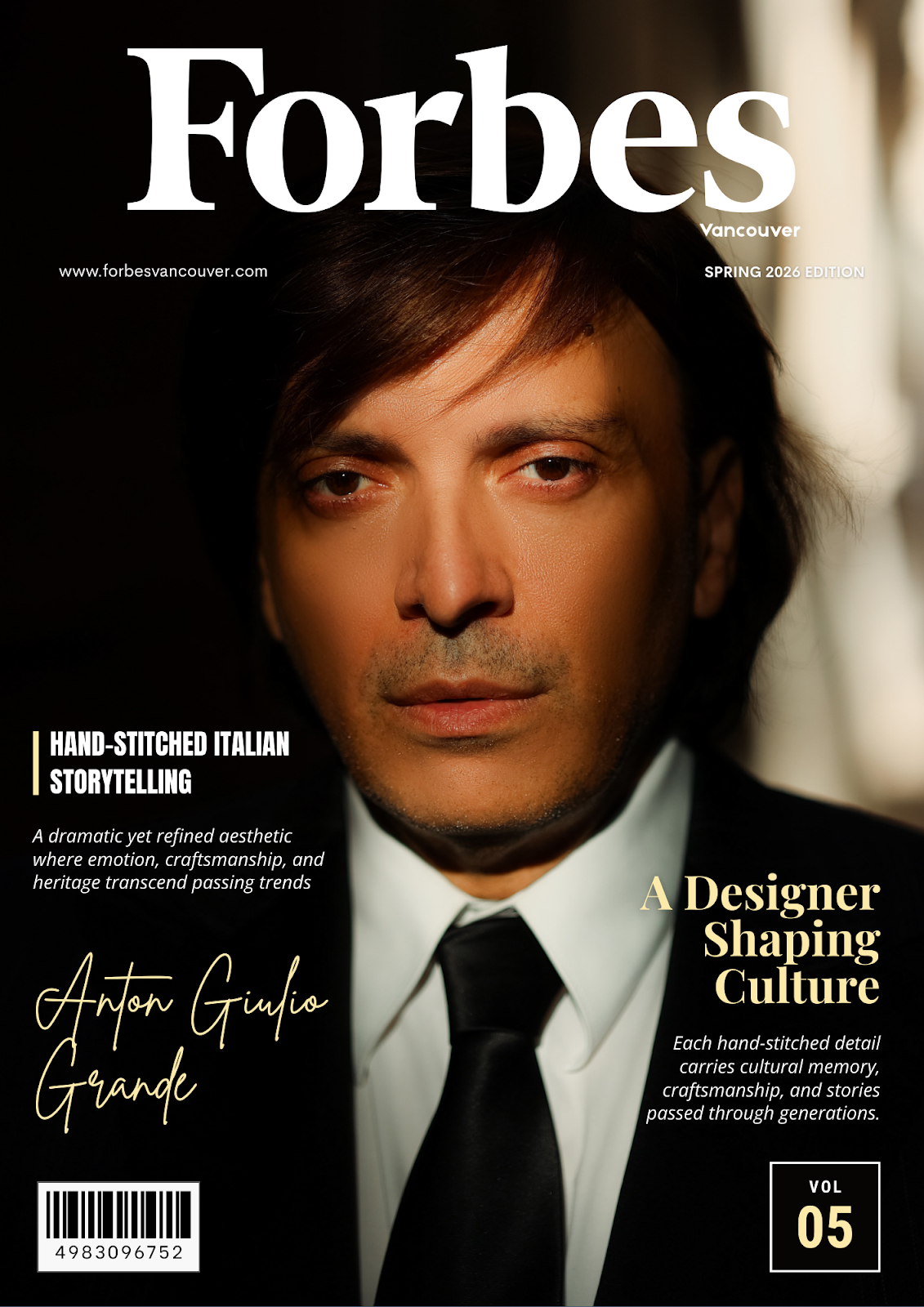
Anton Giulio Grande: The Italian Couturier Who Turned Craftsmanship Into Cultural Currency
From a small Calabrian town to the Vatican’s halls of honor, Grande has spent 25 years proving that fashion can be both art form and economic engine.
Every transformative career in fashion begins with a calculated risk. For Anton Giulio Grande, that moment came at seventeen, when he left Lamezia Terme with little capital but considerable conviction. His education split between Florence’s storied Polimoda and New York’s Fashion Institute of Technology established the tension that would define his aesthetic: Renaissance rigor meeting contemporary audacity.
Building a Brand on Narrative, Not Noise
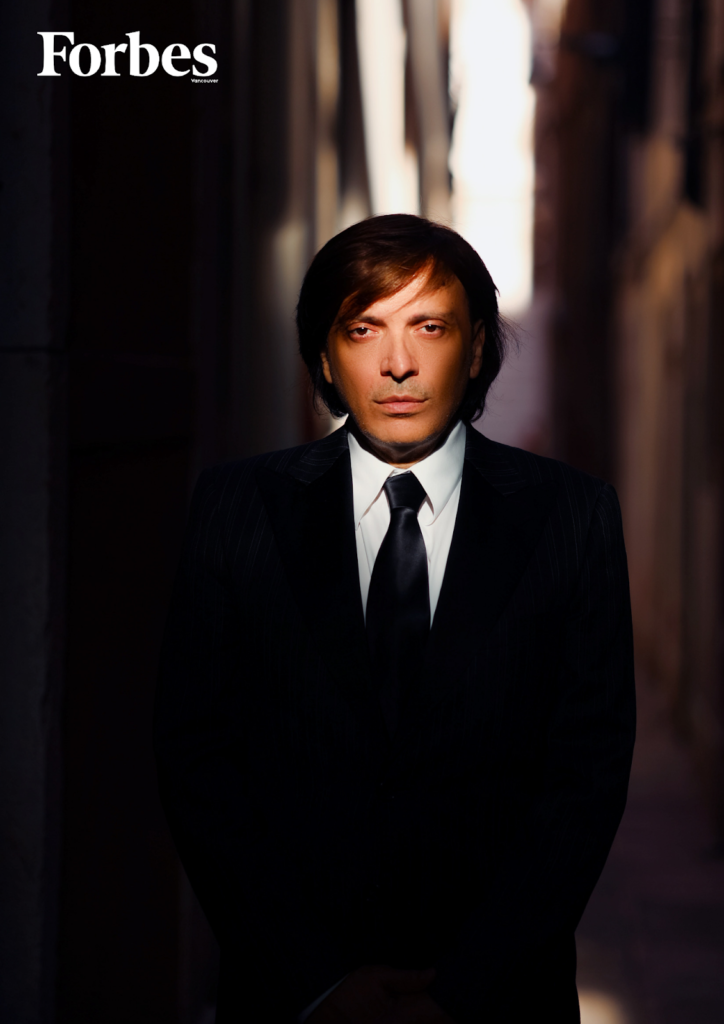
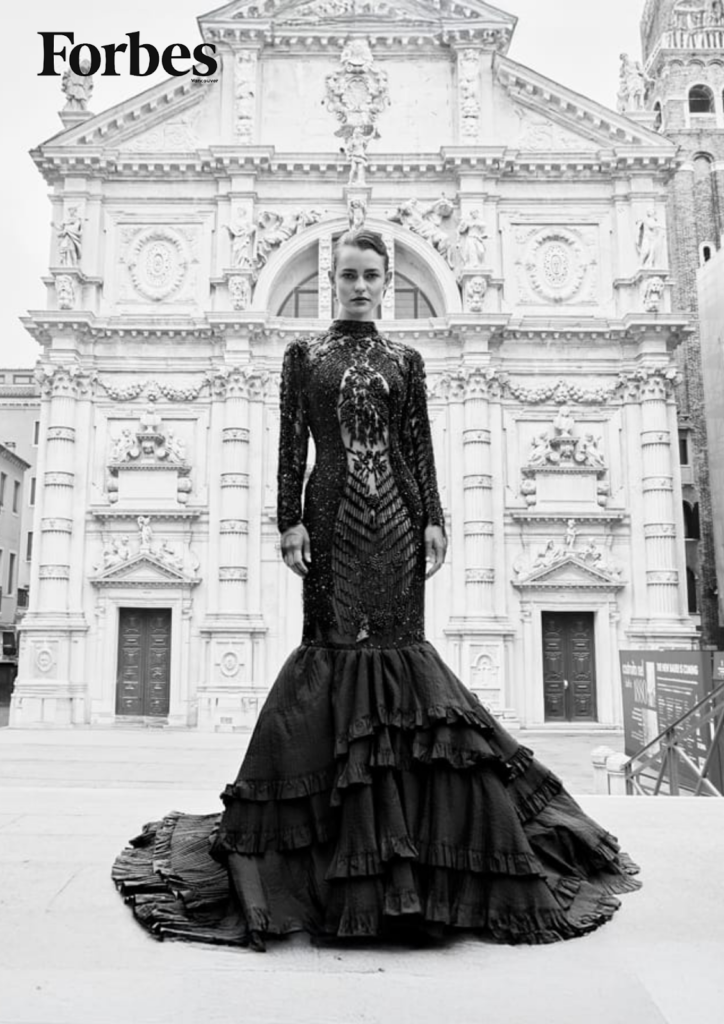
Grande launched his namesake label at twenty-three—an age when most designers are still assisting others. His breakthrough came via Rome’s Donna sotto le Stelle presentation at Piazza di Spagna, a strategic venue choice that signaled ambition and cultural literacy in equal measure. The market responded. His design philosophy—sensuality without vulgarity, embroidery as narrative device, luxury defined by emotional resonance rather than logo prominence—found its audience among discerning clients in entertainment, society, and media.
His client roster reads like a who’s who of international influence. His gowns have generated significant editorial value across major red carpets and magazine covers, while several pieces have transitioned from commercial product to museum acquisition—a trajectory that few contemporary designers achieve.
The Economics of Excellence
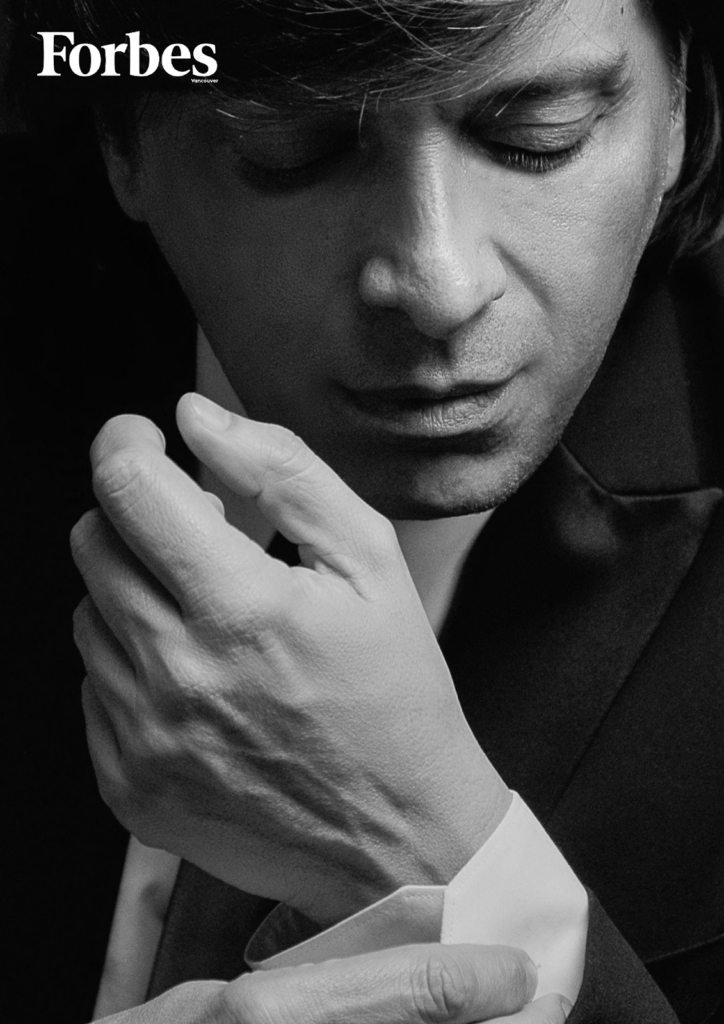
Grande’s business model centers on a increasingly rare commitment: entirely handcrafted production within Italian ateliers. This approach positions him squarely within the premium Made in Italy sector, a designation that carries both cultural cachet and economic implications. He has leveraged multiple industry awards recognizing originality and craftsmanship into broader brand equity and institutional partnerships.
Diversification Through Education and Government
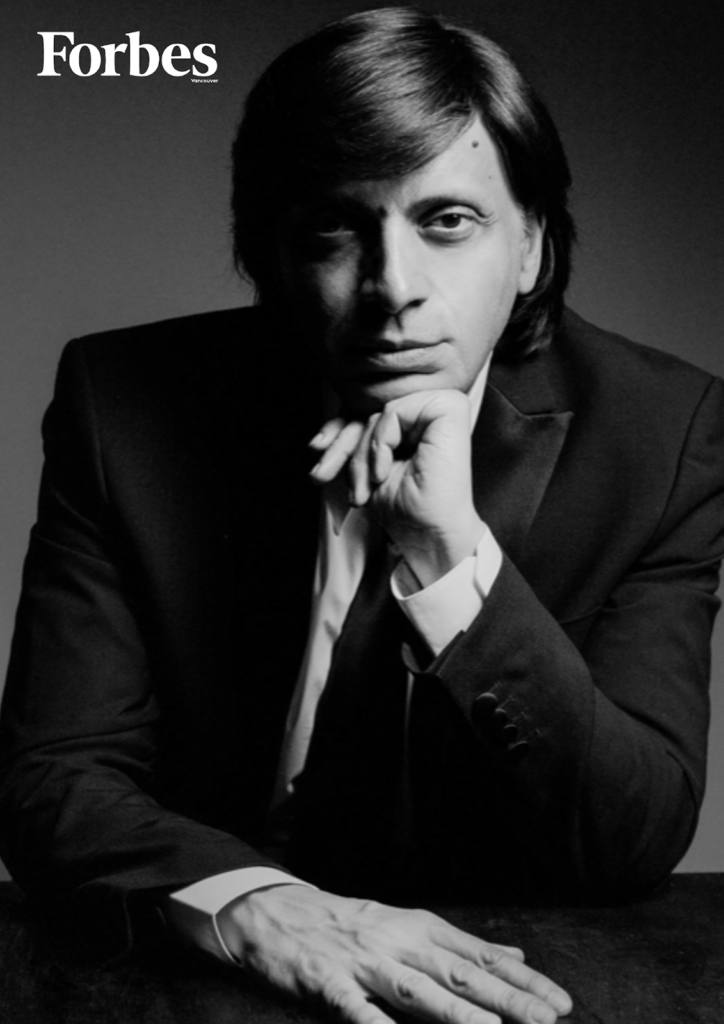
Understanding that influence requires multiple platforms, Grande has systematically expanded beyond commercial fashion. His academic appointments at several Italian universities have transformed his work into curriculum—a strategic move that builds long-term brand legacy while培养 培养ing future industry talent. His couture now appears in graduate research, cementing his position within Italy’s cultural infrastructure.
His appointment as President of the Calabria Film Commission represents a logical extension of his brand narrative into regional economic development. The role positions fashion expertise within broader cultural storytelling—a portfolio expansion that earned recognition from the Vatican in December 2024 with the Premio a Parole Aperte during the Holy Year.
Institutional Validation
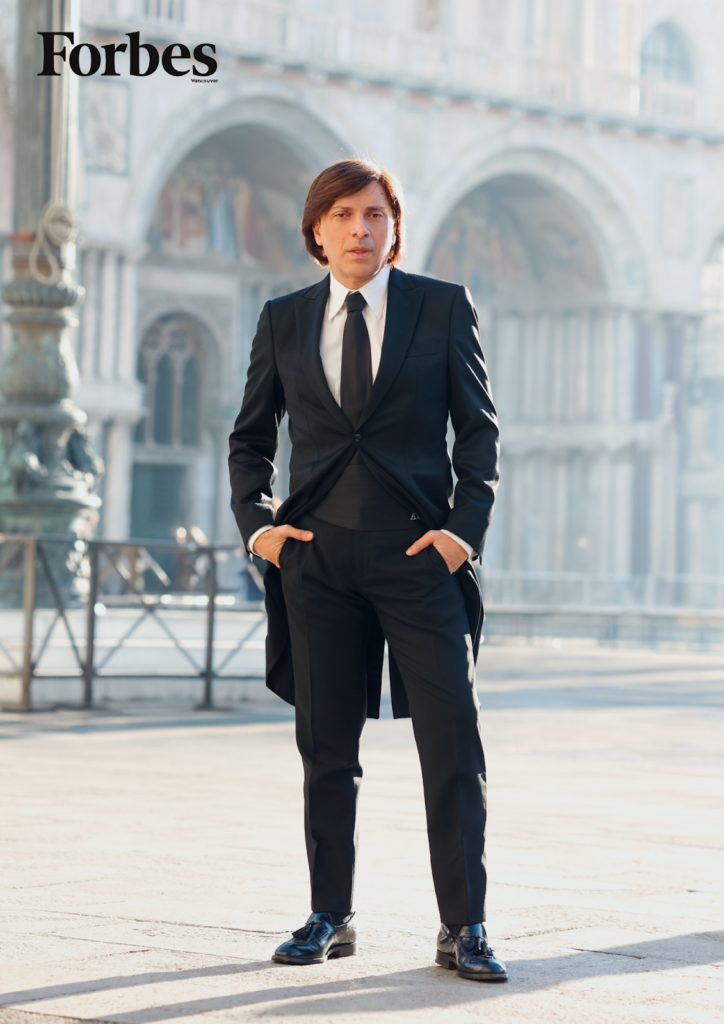
Recent honors signal Grande’s transition from designer to establishment figure. His appointment to the Interuniversity Department Council of the Humanitas University Consortium and the June 2025 conferral of Cavaliere al Merito dell’Imprenditoria Italiana represent governmental recognition of sustained economic and cultural contribution—distinctions that open doors in both private and public sectors.
“Frida”: Strategic Storytelling
His latest Milano Fashion Week collection, “Frida,” demonstrated continued market relevance through cultural reference. The Frida Kahlo homage balanced brand heritage with contemporary positioning—strength, individualism, and visual drama translated for today’s luxury consumer. It was calculated cultural capital: intellectually credible, visually arresting, commercially viable.
The Long Game
After more than two decades, Grande has built what every designer aspires to: a sustainable business model anchored in craft, amplified through cultural institutions, and validated by government recognition. He has transformed personal aesthetic into economic engine, proving that in luxury markets, heritage and handwork remain powerful differentiators.
In an industry increasingly dominated by conglomerate logic and quarterly pressures, Grande represents an alternative path—one where patience, craft, and cultural fluency compound into lasting influence. The question now is not whether his model works, but whether it can scale beyond the singular vision of its founder.
Credits :-
Journalist :- Elena Parmegiani
Location :- Hotel Saint Regis Venezia (IG @stregisvenice)
Photographer :- Igor Lapo, Victoria Antonova, Paolo Guadagnin (IG @paologuadagnimstudio)
Stylist :- Luigi Nisi (IG @jolly_gi91)
Models :- Clara Nehls (IG @clara.nehls) Agency :- Wonderwall Management Milano (IG @ww_mgmt)
Hair :- Angela Mada (IG mua.angelamada)
MUA :- Andrea Natalia Bucur (IG @andrea_mua_)
Ass Fot :-Alessandro G.
Ass Sty :- Vittorio Conoscenti (IG @vittoriconoscenti)